Dear U3I Community and Friends,
We hope you and your family have had a joyous holiday season.
If you’ve already supported our work this year, thank you
— we are deeply grateful.
If not, and you’re considering a year-end gift, there is still time to be part of this momentum. Your support in these final days of 2025 helps position our small-molecule program for Phase 2 trial readiness, moving us closer to the moment we can begin Phase 2 trials for Usher III patients.
Thank you for your thoughtful consideration.
With gratitude, we wish you a happy and healthy 2026.
Cindy Elden
President, Co-founder, and Patient
Usher III Initiative
As 2025 draws to a close, I’m overjoyed to share our significant progress toward a viable treatment for Usher III!
When my father and I founded U3I twenty-seven years ago, we never dreamed we would eventually have our own compound, BF844, a potentially first-in-class, disease-modifying therapy for Usher syndrome type III. Your continued generosity supported the critical Phase 1 clinical trial for BF844, the first-in-human trial, which is now complete. This Phase 1 trial in humans demonstrated safety, a distinction fewer than 1% of drug candidates achieve!
Thank you for helping us reach this momentous milestone.
With Phase 1 concluded, scaled-up manufacturing in place, and a strong safety profile established, we are now preparing for the Phase 2 trial in patients with Usher syndrome type III. We have initiated IND (Investigational New Drug) discussions with the FDA and identified appropriate investigators and clinical sites. Pending the successful raising of funds for a Phase 2 trial in Usher syndrome type III, it is our hope that Dr. Tomas S. Aleman, Co-Director of the Center for Hereditary Retinal Degenerations at the Scheie Eye Institute, University of Pennsylvania, and a trusted leader within the Usher III community, will serve as lead investigator.
After earning his medical degree and completing ophthalmology training in Cuba, Dr. Aleman immigrated to the United States and completed his residency and fellowship training at the University of Pennsylvania. His dedication and scientific insight have made him a leading clinician-scientist in inherited retinal degenerations. Earlier this month, he sat down with me to discuss his expertise and his hopes for Phase 2 of BF844. A link to our Zoom interview appears below.
As I mentioned last year, we are collaborating with the Foundation Fighting Blindness on a four year natural history study needed to determine the optimal time for intervention with our compound in Usher III patients, and we need participants! More details on enrollment below.
To position ourselves for the Phase 2 BF844 trial, we must manufacture the Phase 2 clinical trial compound, complete a long-term toxicology study in animals to demonstrate safety over a longer duration than our human trial in Australia, conduct a biomarker study, and more. Collectively, these essential steps carry significant costs totaling nearly $3 million. It is a heavy lift, but I am confident we can get there. We have no choice.
Here’s how you can make a difference:
1. Financial Support and Strategic Partnerships
The cost of translational medicine is substantial, but together we can make this next phase possible. Please consider making a year-end gift, sharing our mission with family and friends, or introducing us to philanthropic individuals, private foundations, donor-advised funds, nonprofits, or biotech partners who may be interested in supporting this work. Every connection matters.
2. Volunteer for the FFB Natural History Study
Participating in clinical studies is one of the most impactful ways to help advance treatment development. Enrollment is often possible through your regular retina specialist, including Dr. Tomas Aleman at the Scheie Eye Institute at the University of Pennsylvania, Dr. Jacque Duncan at UCSF, or other specialists within our community.
Even if the Uni-Rare study is full at your site, you may still enroll in the patient registry for a baseline visit. This data remains extremely valuable, and these clinicians are qualified to follow participants as part of the Foundation Fighting Blindness Uni-Rare natural history study. Please contact the clinic directly to inquire about enrollment.
Please join the patient registry and schedule a baseline evaluation with a clinician through My Retina Tracker by clicking here.
And if you have any questions or need assistance getting a baseline evaluation with a clinician, please contact me at cindy@usheriii.org.
3. Spread the Word During These Final Days of the Year
As we approach the final days of 2025, a critical time for fundraising and awareness, we would be deeply grateful if you could forward this email, send a note, make a call, or encourage others to get involved
Highlights from Advancing Usher III
A Conversation with Dr. Tomas Aleman
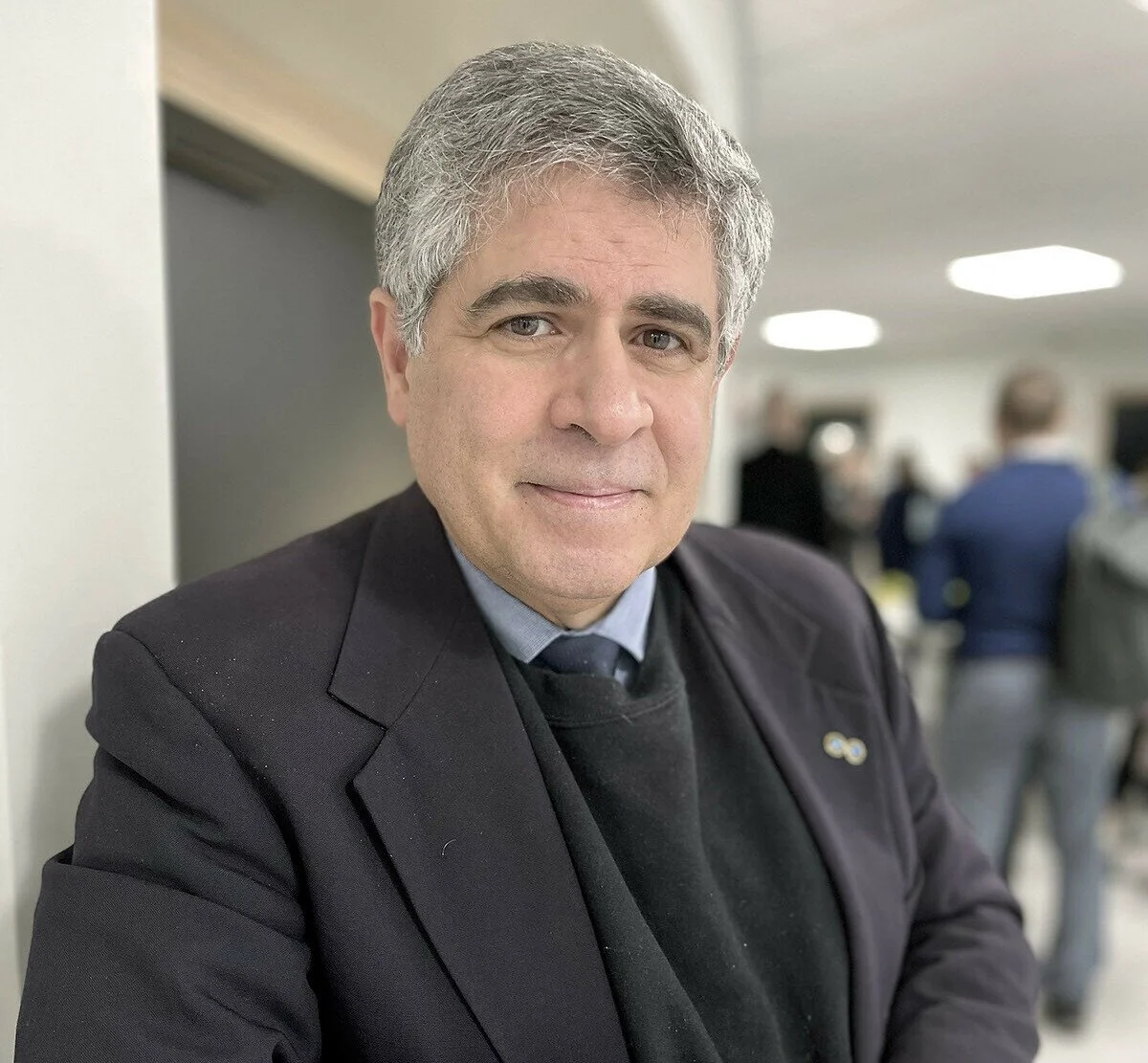
Dr. Tomas Aleman
We are thrilled to share another compelling interview this year - this time with Dr. Tomas Aleman.
In his conversation with Cindy, Dr. Aleman explains how he began focusing on Usher syndrome type III more than thirty years ago, at a time when very little was known about the condition. As he recalls, he “set out to apply myself to finding explanations.”
Dr. Aleman also explains why he refuses to label Usher III, and other retinal degenerative diseases, as “rare” or “ultra-rare.”
“They are not rare to us anymore,” he says. “We have plenty of patients, and patients are not oddities.”
In contrast to gene therapies, which are often invasive and irreversible, Dr. Aleman views U3I’s small-molecule compound, BF844, as “a novel way of treating these types of conditions.” His goal for Phase 2 is clear: “To find an efficacy signal, such as an improvement in vision that is meaningful to the patient, and that does not trigger an adverse event.”
Finally, Dr. Aleman emphasizes the critical importance of patient participation in clinical trials. “Having a population of patients that is committed and interested in moving a specific treatment forward,” he explains, “and reporting back to us scientists, to regulatory bodies, to everybody, is key.”
Please enjoy our full interview with Dr. Aleman here (passcode: 4@?6xyAN).
Your involvement is not just an act of generosity, it’s an investment in our shared future. I have no doubt we can accomplish the many important milestones that lie ahead, and realize a treatment for Usher III together. Thank you again for your unwavering support.
Wishing you and yours happy holidays and a healthy New Year.
With gratitude and hope,
Cindy Elden
President & Co-Founder, Usher III Initiative
Or, if you prefer, mail your check, payable to the Usher III Initiative, to:
Usher III Initiative c/o Michelle Pell
191 N. Wacker Dr., Suite 1790
Chicago, IL 60606
Charting the Future of Usher Syndrome Type III
— A Conversation with Dr. Tomas Aleman —
For more than three decades, Dr. Tomas Aleman has been at the forefront of inherited retinal disease (IRD) research. A pioneer in the development of gene therapy for conditions such as Leber congenital amaurosis (LCA), he now brings that expertise to the Usher syndrome type III community as we approach a potential Phase 2 trial for BF844.
In this interview, Dr. Aleman shares the story behind his lifelong commitment to IRDs and explains why he believes BF844 represents a meaningful new chapter for patients.
Dr. Tomas Aleman
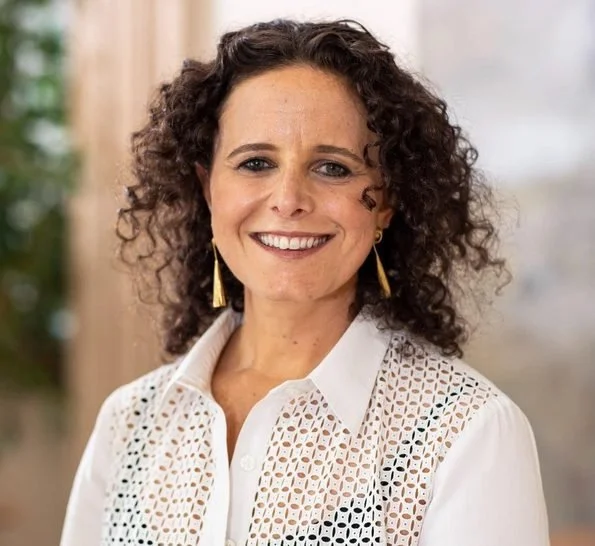
Cindy Elden
What Inspired a Career Devoted to Inherited Retinal Diseases?
Dr. Aleman began studying inherited retinal diseases in the early 1990s, at a time when very little was known about disease mechanisms, and even less about how to treat them. What drew him in was the opportunity to uncover answers that did not yet exist and to translate discoveries from the laboratory into real therapies.
He credits his mentor, Dr. Sam Jacobson, with shaping the direction of his career. At the time, gene therapy was largely theoretical, but the field was advancing rapidly. Dr. Aleman joined the team that would eventually develop Luxturna, the first FDA-approved gene therapy for a retinal genetic disease.
“What’s always driven me,” Dr. Aleman explains, “is that inherited retinal diseases aren’t just eye conditions, they often involve the whole person. Treating Usher syndrome means thinking beyond the retina. That responsibility is inspiring.”
Lessons from Transformational Therapies
Dr. Aleman has helped lead or evaluate multiple landmark therapies for LCA and other IRDs. These experiences taught him that developing treatments for infrequent disorders requires large, coordinated teams; careful translation from animal models to human trials; and the persistence to navigate long scientific and regulatory pathways.
Despite decades of promising proof-of-concept work, only one gene therapy for IRDs has been approved since the early 2000s. Luxturna proved progress is possible, but the path is long, expensive, and often slow. That reality is precisely why emerging approaches, such as small-molecule therapies like BF844, are so compelling.
The Unique Challenges of Rare Disease Trials
Dr. Aleman avoids calling conditions like Usher syndrome type III “rare.” “They aren’t rare to us,” he says. “We see many patients. They are simply infrequent.” Still, low prevalence presents real challenges. Large pharmaceutical companies are often hesitant to invest in small patient populations, and traditional clinical trial models, large Phase 1, 2, and 3 cohorts, do not always translate well to rare diseases.
He emphasizes the importance of adaptive regulatory frameworks and disease-relevant clinical endpoints, which differ significantly from those used in more common conditions such as diabetes or age-related macular degeneration.
Why BF844 Represents a New Direction
For Dr. Aleman, BF844 is not just another compound, it represents a fundamentally new approach to treating genetic disease. Unlike gene therapy, BF844 is non-surgical, offers potentially flexible dosing, may be reversible, and is designed to reach tissues beyond the eye.
“These advantages are important not only for Usher type III,” he explains, “but for many inherited retinal diseases that involve other organs. If we can demonstrate safety, and even a modest efficacy signal, in Phase 2, it could reshape how we think about treating multisystem genetic diseases.”
He hopes the Phase 2 trial will show that BF844 can safely improve or stabilize vision, and possibly hearing, in a way that is meaningful to patients.
Goals of a Phase 2 Trial with BF844
For a Phase 2 trial in Usher syndrome type III, Dr. Aleman is particularly interested in identifying signals such as:
Improved visual function
Slower disease progression
Stability across multiple doses
Patient-reported improvements in daily life
He stresses that variability is expected. “Even when patients share the same gene and mutation, humans are not identical. We expect differences in response. That is true across all of medicine.”
Patient Participation Is Central to Progress
“Without patient participation, we are lost,” Dr. Aleman says. In infrequent diseases, patient engagement is essential. Commitment to trials, despite demanding schedules and logistical challenges, makes research possible and helps regulators understand which outcomes truly matter.
For patients concerned about eligibility, he adds: “Being ineligible does not mean a treatment will not eventually help you. Eligibility is about answering specific scientific questions clearly. A patient who is not eligible for one trial may well be eligible for future trials or treatments.”
The Importance of Natural History Studies
Dr. Aleman strongly encourages participation in natural history studies such as Uni-Rare. Baseline and longitudinal data are invaluable for designing trials and interpreting results. Clinical trials often produce unexpected findings, he notes, and researchers must repeatedly return to natural history data to understand them.
What Excites Him Most About the Future
Just a decade ago, conversations with IRD patients focused largely on low-vision resources, protective strategies, and coping mechanisms. Today, those discussions include gene therapy, gene editing, small molecules like BF844, optogenetics, and cell-based therapies.
Dr. Aleman believes the next five to ten years will bring significantly more options, particularly for patients with advanced disease.
“It is an extraordinary transformation of the field,” he says. “We are finally moving beyond theory into real treatments for human beings.”
A Message to the Usher Syndrome Type III Community
Dr. Aleman closes with cautious optimism. “BF844 is promising, a first of its kind. Your support, whether through natural history studies, clinical trials, or simply giving your time, is essential. Every contribution moves us closer to a treatment. I am excited, and I am hopeful.”
Or, if you prefer, mail your check, payable to the Usher III Initiative, to:
Usher III Initiative c/o Michelle Pell
191 N. Wacker Dr., Suite 1790
Chicago, IL 60606